

In today’s fast-paced business world, having good project management skills is key to success. With many tasks, deadlines, and team members to manage, it’s tough to keep everything in order. But, with the right tools and strategies, you can make your project management process smoother and get great results. This article will show you how Asana, a strong project management tool, can boost your project management skills and help you succeed.
Key Takeaways
- Unlock the full potential of Asana for strategic planning, effective communication, and stakeholder updates.
- Normalize task assignment across your team to ensure seamless collaboration and productivity.
- Balance communication and collaboration to keep your team aligned and focused on project goals.
- Leverage Asana’s Agile features, such as Board View and Backlog Management, to streamline your workflow.
- Establish clear team conventions for task management to foster a consistent and efficient work environment.
Unlock the Full Potential of Asana
Are you ready to boost your projects? Learn how to use Asana to streamline your work, improve teamwork, and increase productivity. We’ll cover strategic planning, effective communication, and keeping stakeholders updated.
Strategic Planning and Prioritization
Start with strategic planning for better project management. In Asana, create custom fields like a “Weekly Status” dropdown to track your team’s progress. Combine several projects into one to make priorities clear.
Use tasks over projects for a better overview. Asana’s tagging and labeling help with self-reporting and transparency. Summary projects collect tasks from various projects, giving you a big picture of your team’s work.
Effective Communication
Good communication is vital for project success. Asana offers tools like task assignments, comments, and file sharing for smooth teamwork. The Asana Inbox keeps everyone updated with project news.
Use the timeline view to see project schedules and task dependencies. This helps you spot delays early and manage your project better.
Updating Stakeholders with Goals and Insights
It’s important to keep stakeholders in the loop. Asana lets you set goals and track progress with metrics. Watch the team’s workload to avoid burnout.
With Asana’s powerful tools, you can make your projects shine. Use Asana project planning strategies, effective communication in Asana, and updating stakeholders in Asana to succeed.
Normalizing Task Assignment Across the Team
Setting up team conventions for Asana is key to using the platform well. Many teams start with a meeting to agree on how to assign tasks. This makes sure everyone knows what to do.
In Asana, assigning tasks tells everyone who is doing what and by when. Making sure everyone knows how to assign tasks helps workflows run smoothly. It also makes sure people are responsible and projects stay on track.
- Have a team meeting to talk about and agree on task assignment rules. This includes:
- Who can assign tasks
- Rules for task deadlines and priorities
- How to handle task notifications and updates
- Use Asana’s tools to make task assignment consistent. This includes:
- Using project templates with tasks already assigned
- Automating task assignment based on project steps
- Using the RACI model (Responsible, Accountable, Consulted, Informed) for clear task ownership
- Encourage team members to own their tasks and share updates on their progress.
By normalizing task assignment, your team works better together. Everyone knows what they need to do. This helps your projects succeed.

“Setting clear team conventions for task management in Asana is key. It keeps projects on track and makes sure everyone knows what they’re doing.”
– Rita Khayat, Senior Program Manager
Leveling Work: Tasks vs Subtasks
Organizing tasks in Asana is key. You must decide how to level your work. Should you use subtasks or separate tasks for each part of a project? This choice helps your team communicate better and stay on track.
Organizing and Structuring Tasks
Users are keen on subtasks in Asana. They want better ways to organize tasks, like subprojects or more subtasks. This shows they like complex structures for different work types.
Some have found workarounds like color-coding or using placeholder projects. But, Asana doesn’t support subprojects well. This makes some users think about switching to other tools.
Asana could improve by letting users choose subtask levels or adding a %Complete field at the Section level. These changes could make managing complex projects easier and boost productivity.

“The ability to display assigned subtasks in the Workload Portfolio view has been raised in a separate thread.”
Balancing Communication and Collaboration
Effective project management is all about finding the right balance between talking and working together. Asana has tools like comments, notifications, and updates that make teamwork smooth. These tools help teams stay clear and responsible, even when working from home.
Many people feel overwhelmed and close to burnout because not many know how to manage their work well. Asana can change that by showing team tasks and deadlines, especially for those working remotely.
Joshua Zerkel, Asana’s Head of Global Community, manages projects well even when he’s always on the move. He uses Asana for remote work. Community members share tips too, like making “Inbox” projects for one-off tasks and using forms to manage workloads.
For better communication and teamwork, the article suggests using Asana’s updates, threads, and comments. You can also use custom fields to show where people work, how they like to communicate, and when they’re free. This helps with working from home. The “away” feature in Asana can also help people not get too overwhelmed, reducing burnout risks.
| Team Role Category | Examples |
|---|---|
| Action-oriented | Shapers, Implementers, Completer Finishers |
| Thought-oriented | Plants, Monitor Evaluators, Specialists |
| People-oriented | Coordinators, Teamworkers, Resource Investigators |
Dr. Meredith Belbin’s team role theory says checking team makeup and finding missing pieces can boost team performance. Doing this every three months can help see how team members are doing and if they need new roles or training.
Using Asana for team communication and Asana for project collaboration helps remote teams do well. They build trust, keep everyone informed, and are accountable. This is key during tough times, like when the World Health Organization says burnout is an “occupational phenomenon.”

Agile Approach: Board View and Backlog Management
Asana’s flexibility lets teams use agile methods for their projects. This means they can quickly adjust and respond to new information. The board view and backlog management tools in Asana are great for agile teams.
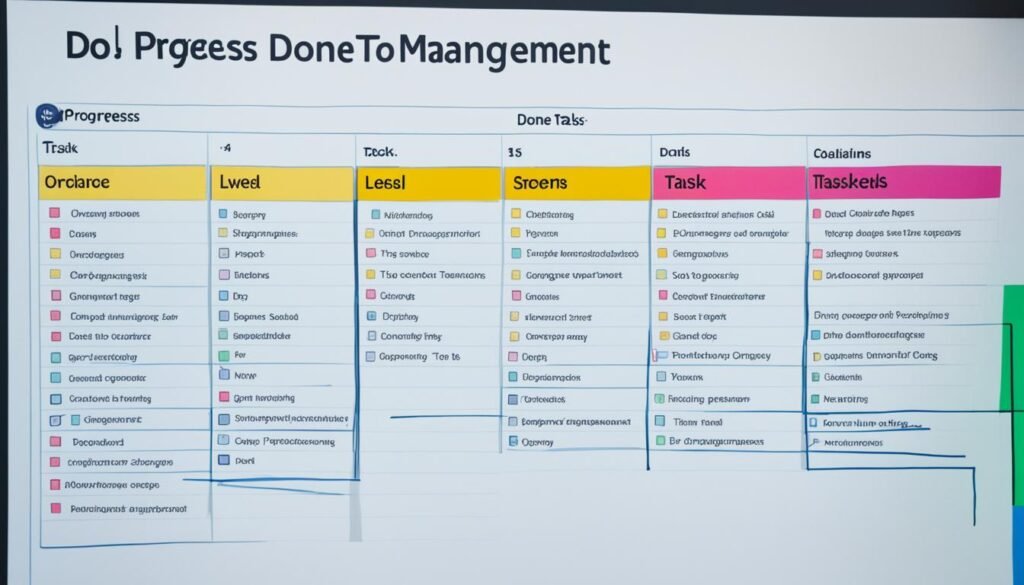
The Asana board view helps teams see their projects and tasks in a clear layout. It’s like a Kanban board, making it easy to manage work and see progress. This is super helpful for agile management, as teams can sort tasks by stage, like “To Do,” “In Progress,” and “Done.”
Asana’s backlog management lets teams keep track of their work in one spot. It’s perfect for agile teams to manage their product or feature backlog. They can turn big tasks into smaller, easier tasks. This keeps the team on track with the most important work and helps them adjust to new needs quickly.
| Feature | Benefit for Agile Project Management |
|---|---|
| Asana Board View | Visualizes project workflows, making it easier to manage and track progress. |
| Asana Backlog Management | Centralized location to prioritize and organize work, enabling teams to focus on high-priority items and adapt to changes. |
Using Asana’s board view and backlog management, agile teams can make their project management smoother. They get better visibility and can quickly adjust to new needs.
Setting Team Conventions for Task Management
Creating clear team conventions for using Asana is key. This means deciding on task names, how to assign work, and how to talk about task status. Setting these conventions early helps everyone understand their roles and work better together.
When bringing Asana into an organization, it’s smart to set conventions to keep everyone in sync. Start a project for more than 5-10 tasks for a specific goal. Create a team for managing 10 to 20 projects together.
| Asana Structure | Recommendation |
|---|---|
| Projects | Create a project when you need to hold more than 5-10 tasks |
| Teams | Create a team when you need to manage 10 to 20 projects |
Tasks can be added to more than one project in Asana. Every project must be in a team. This setup lets you control who sees what, keeping info safe. Teams are places for team-specific talks.
Deciding between a project or a team in Asana can come up. Having clear conventions makes your team work better and more efficiently in the platform.
how to manage projects in Asana
Asana has many tools and features to help manage projects from start to finish. It lets you and your team work better together. You can become more productive and work together better.
Planning Projects with Task Breakdown
Start planning your projects in Asana by breaking them into tasks you can do. Assign tasks, set deadlines, and link them together to keep things running smoothly. This way, you and your team stay organized and know what to do.
- Divide projects into manageable tasks with clear ownership and timelines
- Utilize Asana’s templates or create custom layouts to suit your team’s needs
- Visualize project progress with Asana’s intuitive dashboards and calendars
Executing Projects with Collaboration Features
Asana’s tools help teams work well together. You can share updates, give feedback, share files, and mention team members in real-time. This makes sure everyone knows what’s going on and is responsible for their part.
| Feature | Benefit |
|---|---|
| Asana Conversations | Facilitates real-time discussions and feedback on tasks |
| Task Assignments | Ensures clear responsibilities and deadlines for team members |
| Asana Calendars | Provides a centralized view of upcoming deadlines and milestones |
Using Asana’s tools for planning and executing projects helps your team work better together. It makes it easier to manage projects and reach your goals faster.
Streamlining Project Delivery
Getting projects done on time and within budget is key to any organization’s success. Asana, a top project management tool, has many features to help streamline your project delivery. Let’s see how Asana’s Gantt charts, timelines, task prioritization, and resource management can boost your project management skills.
Gantt Charts and Timelines
Asana’s Gantt charts and timelines show your project’s progress visually. They help spot bottlenecks and guide smart decisions. These tools let you track dependencies, meet deadlines, and fine-tune your project schedule. This keeps your team on track and ensures timely delivery of tasks.
Task Prioritization and Resource Management
It’s vital to prioritize tasks and manage resources well for smooth project delivery. Asana’s features let you focus your team on key tasks and use resources wisely. These tools help avoid delays and boost your project’s performance.
A recent study found that teams using project tracking tools cut down on delays by spotting and fixing bottlenecks. The Anatomy of Work Index also shows that good project tracking improves teamwork and keeps everyone aligned. This leads to better task management and project success.
“Asana’s Gantt charts and timelines have been a game-changer for our project management. We’ve been able to streamline our delivery process and ensure that our team stays focused on the most critical tasks.” – Jane Doe, Project Manager
Using Asana’s project management tools can streamline your project delivery, make the most of resources, and bring great results for your organization.
Analyzing Project Performance with Analytics
Unlock the power of Asana’s reporting and analytics to get deep insights into your project’s performance. These tools help you make smart decisions, improve your strategies, and boost your projects’ success.
Asana’s analytics give you a clear view of your project’s progress. You can see tasks by status, who’s working on them, and milestones reached. This helps you spot areas needing attention and adjust your plans quickly.
Exporting Asana data to tools like spreadsheets or data visualization platforms opens new doors. You can explore custom calculations, track KPIs, and use predictive modeling. This takes your Asana project performance analytics to the next level.
Choosing Asana’s reporting or external analytics tools is up to you. The goal is to use these insights to improve your Asana reporting and make better decisions. By knowing your projects’ real-time status, you can tackle challenges, grab opportunities, and keep your Asana insights-led projects successful.
Use Asana’s analytics to unlock your project management’s full potential. Turn data into insights that lead to better efficiency and success in your projects.
“Asana’s analytics are a game-changer for our project management team. The insights we’ve gained have allowed us to make data-driven decisions that have significantly improved our project delivery and overall performance.”
– Jane Doe, Project Manager at XYZ Inc.
Mastering Essential Project Management Skills
Effective project management is key to success in any project. With Asana, you can improve important skills like leadership, communication, organization, and problem-solving. These skills are vital for finishing projects on time and within budget.
Leadership and Communication
Leading and communicating well is crucial for a project manager. Asana helps you manage tasks, share updates, and talk with your team. This makes it easier to work together, keep everyone informed, and build a transparent work environment.
Organization and Problem-Solving
Good project management means paying attention to details and solving complex problems. Asana lets you break projects into smaller steps, use resources wisely, and meet deadlines. If problems come up, Asana’s tools and analytics help you adjust and solve them.
By improving these key skills with Asana, you become a strategic leader. You can handle teams of any size. Asana’s tools and features help you do well in all parts of project management.
| Essential Project Management Skills | How Asana Supports Skill Development |
|---|---|
| Leadership and Communication |
|
| Organization and Problem-Solving |
|
“Mastering project management skills is a game-changer in today’s fast-paced business landscape. Asana’s comprehensive tools empower you to lead with confidence, communicate effectively, and navigate even the most complex challenges.”
Conclusion
Using Asana can really boost your project management skills. It’s great for both experienced and new project managers. Asana gives you the tools to plan better, execute smoothly, and deliver on time.
This article showed how people use Asana in different ways. Brock_Pinington, lpb, and Katie_Reynolds shared their experiences. They showed how Asana helps with teamwork in projects.
Begin your Asana journey now and see how it changes your project management. With the tips and best practices from this article, you can improve your skills. This will help you make your projects more efficient and successful.
FAQ
How do I manage projects effectively in Asana?
What are the best practices for project management in Asana?
How can I unlock the full potential of Asana for project management?
How do I normalize task assignment across my team in Asana?
What is the difference between tasks and subtasks in Asana?
How can I balance communication and collaboration in Asana?
How can I use Asana’s board view and backlog management for an agile approach?
What are some key team conventions to establish for task management in Asana?
How can I use Asana for effective project planning and execution?
How can Asana help me streamline project delivery?
How can I analyze project performance using Asana’s analytics?
What essential project management skills can I develop by using Asana?
Source Links
- https://forum.asana.com/t/master-project-management-basics/39479 – Master project management basics
- https://asana.com/resources/managing-multiple-projects – Manage Multiple Projects: 9 Effective Strategies [2024] • Asana
- https://forum.asana.com/t/managing-prioritizing-reporting-a-lot-of-projects-in-asana/229 – Managing/Prioritizing/Reporting A LOT of Projects in Asana
- https://forum.asana.com/t/asana-implementation-process-best-practices-and-lessons-learned-from-different-companies/2666 – Asana Implementation Process: Best practices and lessons learned from different companies
- https://projectmanagementpath.com/how-to-effectively-use-asana-for-project-management/ – How to effectively use Asana for project management – Project Management Path
- https://forum.asana.com/t/get-help-from-an-artificial-intelligence-to-manage-your-projects-tasks/11446 – Get help from an Artificial Intelligence to manage your projects/tasks
- https://asana.com/resources/asana-on-asana-organizational-planning – How Asana uses Work Management for Organizational Planning [2024] • Asana
- https://forum.asana.com/t/all-levels-of-subtasks-visibility-within-the-timeline-and-workload-portfolio-views/171965 – All Levels of Subtasks Visibility within the Timeline and Workload(Portfolio) Views
- https://forum.asana.com/t/project-hierarchy-projects-subprojects-sections-tasks-subtasks/16500 – Project Hierarchy / Projects / Subprojects / Sections / Tasks / Subtasks
- https://forum.asana.com/t/ability-to-add-and-manage-nested-sub-tasks-multiple-levels/661044 – Ability to add and manage nested sub-tasks (multiple levels)
- https://asana.com/resources/effectively-manage-team-workload – Workload Management: Guide to Managing Workload Effectively [2024] • Asana
- https://asana.com/resources/team-roles – Team Roles: 9 Types to Create a Balanced Team [2024] • Asana
- https://blog.asana.com/2020/03/asana-tips-work-from-anywhere/ – Asana tips: 5 ways to work from anywhere – The Asana Blog
- https://forum.asana.com/t/get-more-agile-using-asana/197092 – 🎨 Get more Agile using Asana
- https://forum.asana.com/t/tips-for-agile-in-asana/2406 – Tips for Agile in Asana
- https://forum.asana.com/t/quick-asana-structuring-tip-for-your-non-profit/63995 – Quick Asana structuring tip for your non-profit
- https://forum.asana.com/t/directing-a-team-tasks-and-projects-for-district-schools/32121 – Directing a team, tasks and projects for district schools
- https://forum.asana.com/t/how-to-organise-a-list-of-projects/4649 – How to organise a list of projects?
- https://asana.com/features/project-management – Explore Asana Task & Project Management Features • Asana
- https://everhour.com/blog/asana-for-project-management/ – Asana for Project Management: Streamlining Workflows for Success
- https://asana.com/resources/what-is-project-tracking – Project Tracking: How to Track Projects Effectively [2024] • Asana
- https://forum.asana.com/t/use-case-for-a-large-data-collection-research-project/19897 – Use case for a large data collection & research project
- https://asana.com/resources/project-baseline – Measure Performance with Project Baselines [2024] • Asana
- https://blog.coupler.io/asana-analytics/ – Two Ways to Run Asana Analytics | Coupler.io Blog
- https://trackingtime.co/best-practices/master-project-management-skills-the-asana-way.html – Mastering Project Management Skills: The Asana Way – TrackingTime
- https://academy.asana.com/ – Asana Academy
- https://curatepartners.com/blogs/skills-tools-platforms/mastering-project-management-skills-essential-for-success-across-industries/ – Mastering Project Management Skills: Essential for Success Across Industries
- https://forum.asana.com/t/project-overview-description/45033 – Project Overview / Description
- https://forum.asana.com/t/instant-summaries-for-tasks-find-clarity-without-another-meeting/561557 – Instant Summaries (for tasks) – Find clarity without another meeting
- https://asana.com/resources/how-project-status-reports – Write a Project Status Report in 8 Steps + Template [2024] • Asana