
Did you know that by 2030, foldable phones might make up about 10% of all smartphone sales? This shows how fast mobile innovation is moving. It also shows the big changes we’re expecting in the world of smartphones. Soon, our phones will turn into advanced centers for all parts of our daily lives, far beyond just calling and texting.
In the near future, smartphones will see big changes. We’ll get new ways to control them, smarter artificial intelligence, and even augmented reality. These future smartphone trends will greatly improve how we use phones. They will change our relationship with technology. Looking ahead, we can expect phones with cameras hidden inside the screen for a smoother look. We’re also looking forward to 6G networks. These networks will let us connect faster and move data quickly.
Key Takeaways
- Foldable phones are expected to dominate nearly 10% of the smartphone market by 2030.
- The transition to 6G networks promises ultra-fast data speeds, amplifying mobile experiences.
- Embedded front-facing cameras may be standard, enhancing device aesthetics and functionality.
- Artificial intelligence will play a pivotal role in shaping our smartphones over the next decade.
- Wireless technologies are set to replace traditional ports, leading to a portless future for smartphones.
- Augmented reality will transform how we use smartphones, blending the digital and physical worlds.
- For further insights on smartphone technology, check out this guide on smartphone photography.
Introduction to Future Smartphone Trends
The world of smartphones is changing fast. It’s exciting to think about how future trends will change the way I use technology. Soon, phones will do much more than just make calls. They will become smarter, work better, and have new features we haven’t seen yet.
Battery tech is getting a big upgrade. An Israeli company, StoreDot, blew our minds in 2015. They showed off a battery that charges fully in under a minute. This sort of tech will be key in new gadgets. And peptide molecules could lead to better batteries too.
Graphene is another game changer. It’s super strong, see-through, and great at conducting electricity. Thanks to efforts by Samsung, smartphone screens might soon use graphene. This could mean better and more durable displays.
Also, eSIM cards are on the rise, with big names like Apple and Samsung leading the charge. They let you switch networks easily. Plus, phones with pressure-sensitive screens are becoming more popular. They make using your phone feel more natural and interactive.
But innovation isn’t just about hardware. Qualcomm and Google are working on smart cameras. These cameras will know what they see, opening doors to cool new uses. Voice controls are getting better too. They’ll understand us more easily and make using devices a breeze.
While phone sales have been up and down, they’re expected to grow 3% in 2024. Budget phones are becoming more popular. But the demand for pricey phones, costing between $600 and $799, is expected to jump by 17%. This shows how varied our tastes in technology are becoming.
| Smartphone Segment | Projected Growth Rate (%) |
|---|---|
| Budget and Mid-Range Smartphones | 11 |
| Premium Smartphones (USD 600 to USD 799) | 17 |
| Generative AI Smartphones (2024-2027) | 1 Billion Units |
| Global Smartphone Penetration Rate for 5G | 68% in 2024, expected to grow over 80% by 2027 |
| Expected AR and VR Users by 2027 | Over 100 Million |
Looking at these trends is exciting. They promise to make life better and bring us closer together. I can’t wait to see how these new technologies will change how I use smartphones in the future.
Advanced Input Methods: Beyond the Touchscreen
Today’s smartphones depend on the touchscreen and buttons for user interaction. But we’re moving past traditional touch. Innovations are pushing us to new ways of interacting with our phones. By using sensors already in our devices, like accelerometers and gyroscopes, we can explore new input methods without extra hardware.
Think about controlling your phone with hand gestures or voice commands. Or even devices that can read your thoughts through brain-computer links. These advanced smartphones could make our interactions more natural. Actions like calling or texting could become more intuitive. Looking into alternatives to touchscreens opens up exciting new paths. For example, using the sides and backs of phones could improve how we use them. This way, our view of the screen isn’t blocked, giving us more ways to interact.
BeyondTouch technology is working to improve how we control our smartphones through indirect touches. This approach could change our relationship with our devices. Unlike traditional methods, rule-based systems are showing better results for detecting specific gestures, like tapping corners. And by using data tailored to us, machine learning can better match our preferences.
Wearable technology is becoming more popular. Now, one in four Americans is open to the idea of devices you can implant. Younger people, in particular, seem excited about these advancements. Moving to touchless technology might be essential, not just for convenience but also for health. It could help reduce disease spread by cutting down on our need to touch devices.
Foldable Phones Take Center Stage
Foldable phones are becoming a big deal in the tech world. They catch our eye with their cool features and new looks. Brands like Samsung and Huawei are leading the way. They show us what smartphones might look like in the future, around 2030.
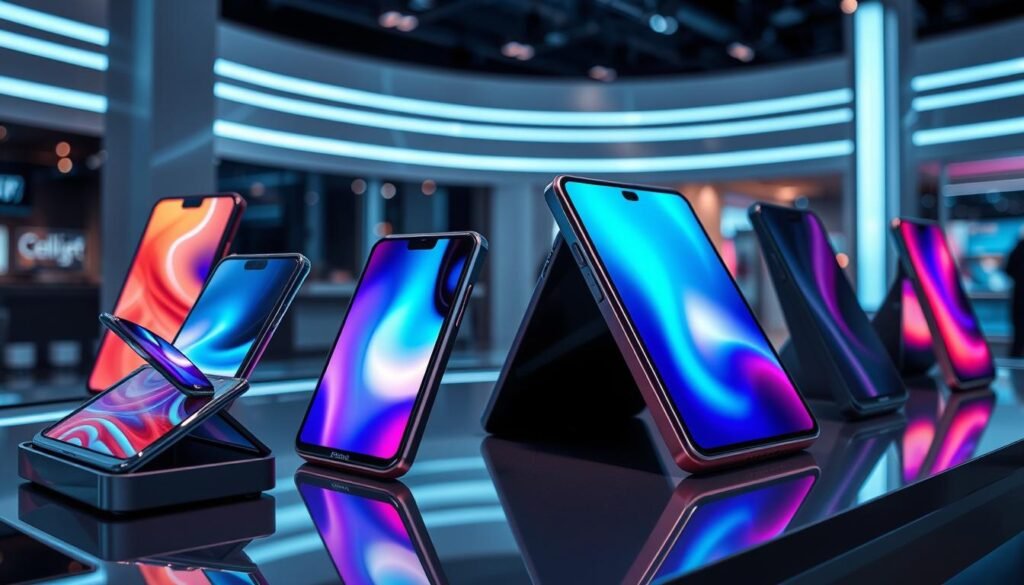
Counterpoint Research says foldable phone shipments could reach 100 million by 2027. That’s a huge jump from 20 million in 2023. This increase shows how popular these innovative phones are becoming. The 2023 Motorola Razr, which costs about $700, is making it easier for people to get these phones.
Foldable phones are great for many reasons. They let you do more, whether it’s work or play. You can look at different documents at the same time. This makes working much easier. They are also great for watching movies or playing games. The big screens make everything more fun. Artists like them too, because they have more space to create.
But, these phones are not perfect. They can be expensive and not as tough as we’d like. Making them cheaper and stronger is important for more people to start using them.
In the end, foldable phones are changing the game in mobile tech. They combine style with function in a new way. As they get better, they’re going to change how we use our phones. They’re becoming the stars of the smartphone world.
Augmented Reality Integration
By 2030, augmented reality (AR) will change how I use my smartphone and interact with the world. It’s a key development in mobile tech, offering new features that improve daily activities. For example, imagine using my phone to navigate in real time. It could overlay directions onto my real-world view, helping in unknown places.
The use of AR is growing fast in education, healthcare, and marketing. These areas are getting a boost from digital innovations. For instance, AR lets me try clothes on virtually or see how furniture looks in my home. It also helps in translating languages through my camera, easing communication barriers.
Gaming is leading the way with AR, creating games that mix real and digital worlds. This changes how we think about gaming. With startups focusing on AR games that many can play together, we’re seeing a new era. Also, the use of smart glasses in manufacturing and logistics shows how AR helps with work tasks.
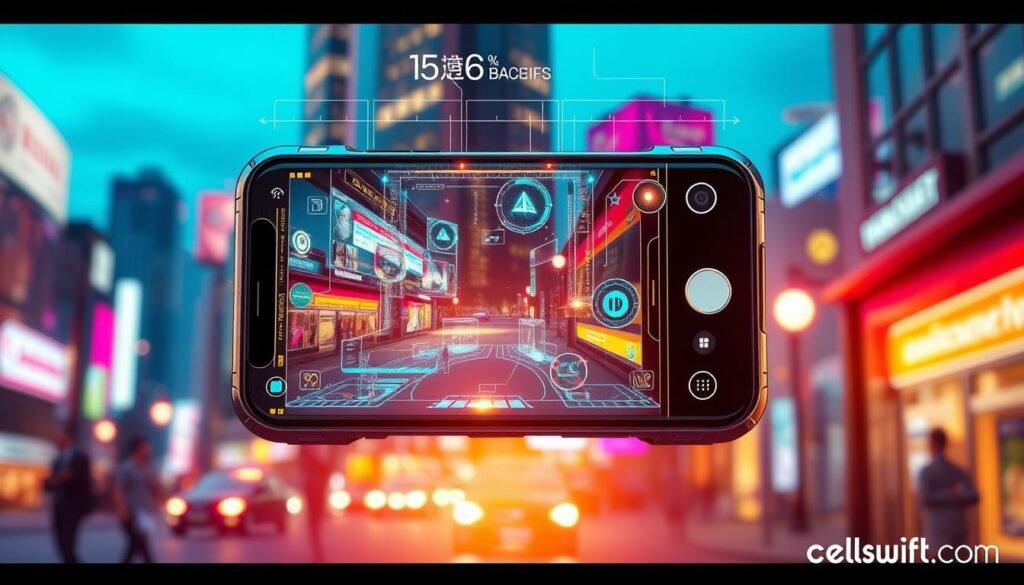
Apple’s ARKit and Google’s ARCore are racing to add new features. They’re enhancing AR with capabilities like 4K video and quick AR setups. This competition makes sure AR remains exciting and useful. By 2024, we expect to see 1.7 billion people using mobile AR, which shows its growing role in our lives.
| Feature | ARKit | ARCore |
|---|---|---|
| Latest Update | ARKit 6 (October 2023) | ARCore 1.45.0 |
| Key Features | 4K video capture, object occlusion, simultaneous camera use | Device flashlight support for dark environments |
| Market Share (Q1 2024) | 29.29% | 70.71% |
| Growth Rate | Projected to exceed $300 billion by 2030s | Expected CAGR of 33.5% |
The AR market is growing fast, and we expect a lot from it. It will change not just games and fun activities but also everyday tasks and how we interact with others. All of this will happen through the exciting potential of augmented reality.
The Rise of Artificial Intelligence
Artificial intelligence is now a big part of modern smartphones. It’s a key factor in the latest tech trends. Currently, around 3.1 billion smartphones are in use around the world. With AI becoming more common, the demand for new AI smartphones is growing fast. IDC says Gen AI smartphone shipments will increase by 364% in 2024, hitting 234.2 million units. This number could reach 912 million by 2028. The growth rate from 2023 to 2028 is estimated at 78.4%.
The quick growth changes how we see devices. They’re not just for talking anymore but now serve as smart partners. Companies like OPPO are adding over 100 Gen AI features to their devices next year. These features make the phone more personal. They adjust to what each user likes and needs.
Take the Motorola Razr 50 Ultra, for example. It will use Google Gemini as its main digital helper. This phone will have AI that can recognize pictures, summarize text, and even choose message tones. These steps show how AI makes regular phones much smarter. They understand complex user actions better.
- AI improves how devices process speech and understand us.
- It suggests things we might like, using our browsing history.
- Helpers like Siri and Google Assistant make managing tasks easier.
Also, AI makes using smartphones a much better experience. It can personalize experiences for each user, making the bond with their devices stronger. As AI grows, we’ll see more breakthroughs. This puts AI at the heart of future phone developments and how we interact with them.
| Year | Gen AI Smartphone Shipments (Millions) | CAGR (%) |
|---|---|---|
| 2024 | 234.2 | 364 |
| 2028 | 912 | 78.4 |
Enhanced Security and Privacy Features
When thinking about future smartphone trends, security and privacy are big concerns. Our smartphones hold a lot of data, from our online activities to where we go. It’s vital to keep this information safe from breaches.
The number of cybercrimes is skyrocketing. Hackers now frequently attack mobile devices with dangerous software and scams. The thought of privacy breaches leading to targeted ads or financial losses is worrisome.
But, there are safer options out there. Systems like Graphene OS, Lineage OS, and Pine Phone focus on keeping users safe. They’re making waves by putting security and privacy first.
Big companies like Apple and Google have a huge influence on mobile security. Yet, their approaches sometimes make us question how they handle our data. More and more people are moving towards systems that offer more control and safety. This change is sparking interest in new mobile operating systems that are open and secure.
There are now more choices for mobile operating systems, and that’s exciting. It shows that privacy and security are becoming crucial in mobile tech. These alternatives give us control and trust in managing our digital footprints.

Sustainable Design and Practices
In the world of mobile tech, sustainable practices are key. Today, over 4.5 billion smartphones are in use globally. This makes us think about their impact on our planet. Most of a smartphone’s carbon footprint comes from its making. This calls for a big change.
By 2022, smartphones will cause about 146 million tons of CO2 emissions. This shows why we need eco-friendly technologies in making them.
Companies are now pushed to use recycled materials. This doesn’t just cut waste but also fits what today’s shopper wants. Around 75% of people think green when they buy. Brands that go green catch their eye. Also, using renewable energy in making these devices cuts down on emissions.
Battery tech will see big changes by 2030. Batteries might use materials like graphene for quicker charging and longer life. This fits well with people wanting to fix, not replace, their gadgets.
The end goal is to blend mobile advancements with green practices. This could lead to modular phones, easy to upgrade and with longer lives. This approach cuts waste and promotes sustainability in tech.
| Innovation | Impact on Sustainability |
|---|---|
| Recycled Materials | Reduces waste and carbon emissions during production |
| Energy-Efficient Facilities | Lowers operational costs and environmental impact |
| Nano-Tech Batteries | Provides longer battery life and reduced need for disposal |
| Modular Designs | Facilitates upgrades, extending product lifespan |
| Renewable Energy Sources | Minimizes carbon footprint of manufacturing processes |
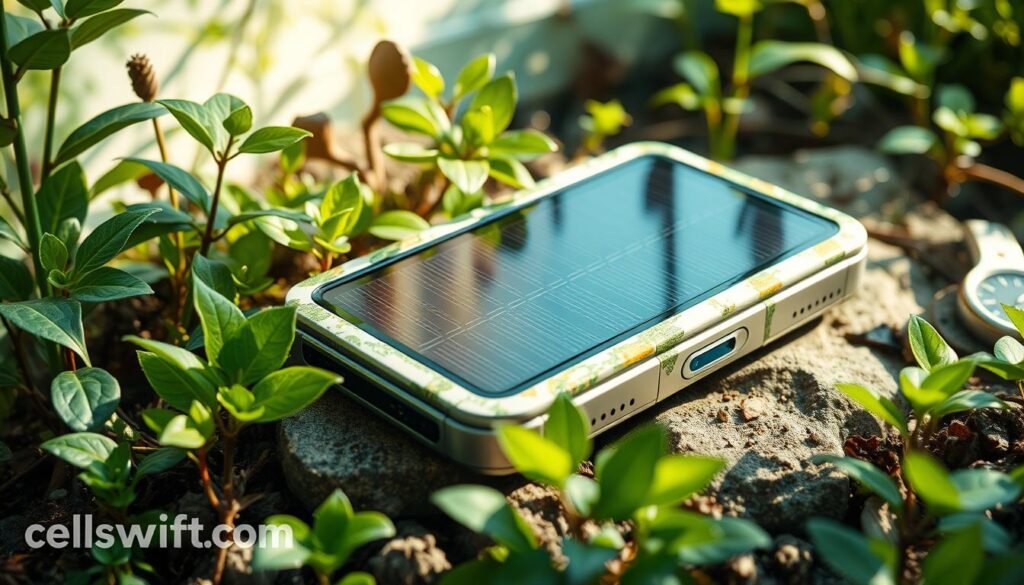
By 2030, mixing practicality with green ways will shape phone tech’s future. Knowing about these steps today points to a greener tech future.
For more about what’s next, see this piece on mobile tech trends.
Future Smartphone Trends: Connectivity with 6G
By 2030, the mobile world will look very different, thanks to 6G technology. We’re heading for a future where we will see huge changes in how we connect. These changes will kickstart new ways to use our phones. While 5G was a big step up, 6G will take things to a whole new level.
Right now, 5G networks can hit speeds up to 20 Gbit/s. They support a million devices in a small area and have very low delay times. But 6G? It’s going to blow past these numbers, reaching speeds in the terabits. This means even quicker streaming, downloads, and real-time apps that will change how we do everyday tasks.
Another big change with 6G will be how fast it reacts, with delays as low as 10 microseconds. This is huge for things like driving cars without a human and doing surgery from miles away. With support for 10 million devices in a small area, 6G will let us do things we can’t even imagine today.
- Enhanced experience for XR technologies such as AR and VR.
- Support for real-time 3-D model updates in construction.
- Improved precision in agriculture through real-time soil data transmission.
Governments will have a big role in making 6G a reality. They’ll need to update our networks with things like small cells and fiber optics. While cities will see these upgrades fast, rural areas might get left behind. It’s important that everyone works together to make sure no one is left out of the 6G future.
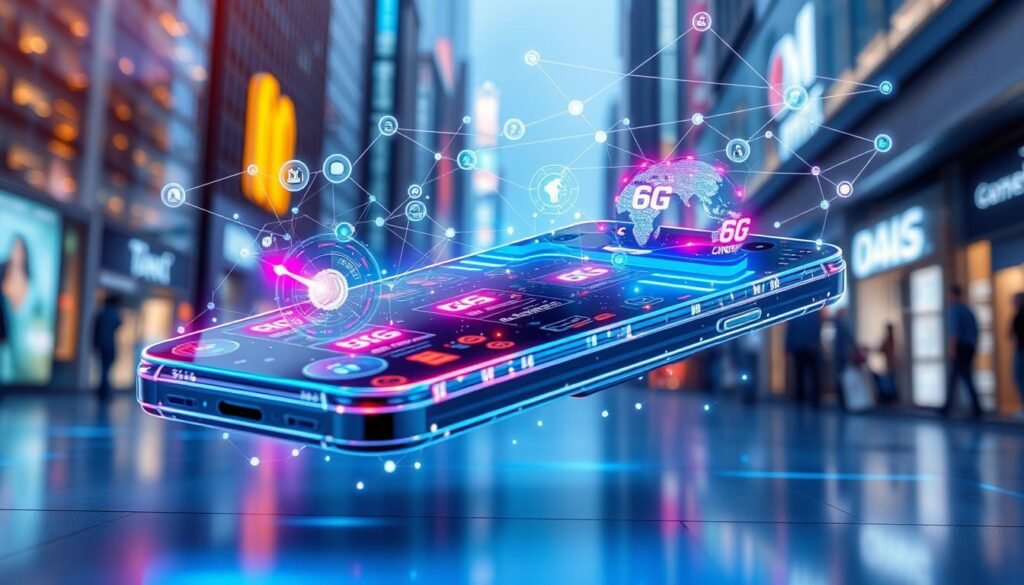
Samsung is leading the push towards 6G. Having the right rules and infrastructure in place will be key to this shift. I’m excited for a world where 6G makes everything we do online smoother and faster. It’s going to make our day-to-day lives better in ways we’re just starting to imagine.
| Feature | 5G | 6G |
|---|---|---|
| Peak Data Rate | 20 Gbit/s | 1 Tbps |
| Connection Density | 1 million devices/km² | 10 million devices/km² |
| Air Latency | 1 ms | 10-100 µs |
| User Experienced Latency | N/A | Less than 10 ms |
| Expected Rollout | 2020 | 2030 |
Holographic Displays and Advanced Visuals
The world of cutting-edge smartphones is changing fast with new holographic display tech. This breakthrough turns simple images into live holograms that pop out from phones. It lets users see advanced visuals with depth, something flat images can’t do.
Holograms are special because they show light in realistic ways. This gives a sense of depth and movement. Now, they are not just for fun. They help in learning, image security, recognizing 3D objects, and more.
The market for holographic displays is zooming. It’s worth USD 3.3 billion in 2023 and will grow by over 20% yearly till 2032. The 4D holographic display part is the star, looking to hit $7 billion by 2032. North America is leading, with more than 35% of the global share in 2023.
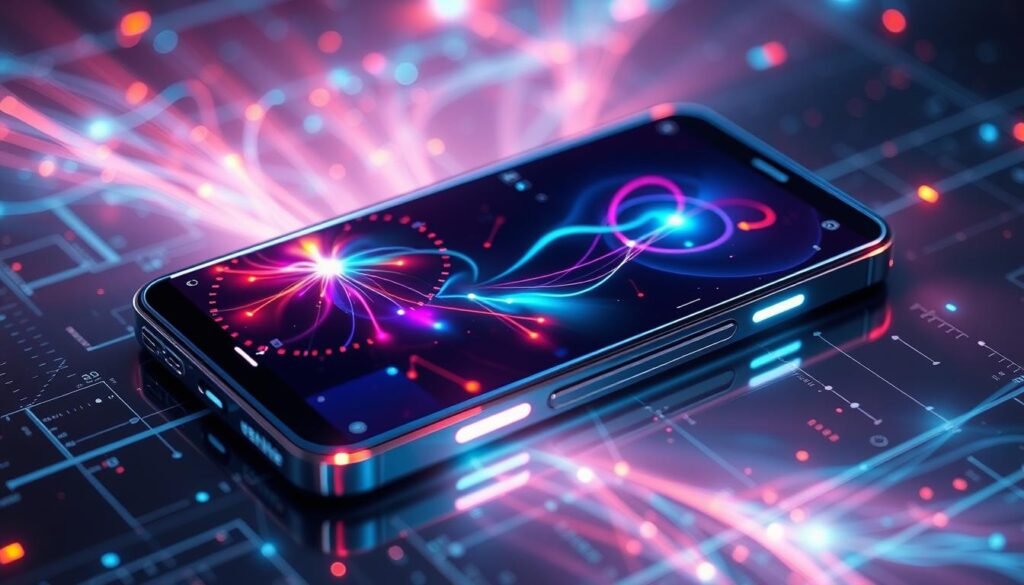
Adding such digital developments to phones changes how we see digital stuff. Imagine moving through menus with hand waves or watching a movie play out live in front of you. No need for 3D glasses. These holograms can make tech more fun and real for us.
For more on holographic displays and what they mean, do read up on this cutting-edge technology. They’re going to shift our smartphone expectations big time, and it’s exciting to see where it goes.
Wearable and Portless Smartphone Technology
The world of tech is changing fast, especially with wearable and portless gadgets. Looking towards 2030, we see big changes ahead. More and more, we’re using wireless stuff like earbuds. This could mean no more plugs on phones, making them super smooth to use.
Tech companies are all in on tech that charges phones through the air. This means you might not need cables to charge your phone soon. It could change how we keep our devices powered up. Also, smarter AI could make phones recognize your face or give you clever alerts without needing lots of parts.
Things like smart glasses could change how we see info. This matches with phones that have screens you can pull out or shrink. These cool inventions are making tech easier and more fun to use.
| Technology | Description | Impact on Future |
|---|---|---|
| Wearable Devices | Smart accessories that connect seamlessly to smartphones | Enhanced mobility and convenience |
| Portless Technology | Elimination of physical ports for a more streamlined design | Improved durability and aesthetics |
| Over-the-Air Charging | Wireless charging capabilities from close proximity | Revolutionizes charging dynamics |
| Smart Glasses | AR/VR-enabled eyewear functioning like smartphones | New ways to interact with digital content |
| Rollable Smartphones | Flexible screens that adjust size based on use | Enhanced user experience for multimedia consumption |
We’re heading towards a cool future where tech blends into our lives smoothly. As gadgets come together, how we use tech will completely change.
Conclusion
Looking ahead to 2030, we see a future rich in mobile innovation. The smartphone market is expected to reach $1.08 trillion by 2029. This shows that smartphones will continue to be vital in our lives.
They will have AI-driven apps, better security, and focus on being eco-friendly. My phone will become more than a device; it’ll be a key part of my life.
The emergence of foldable phones and integration with smart ecosystems will open new doors. I imagine a world where my phone is central to everyday activities. This technology will blend convenience with personalization.
Today, many school kids already have mobile phones. The importance of educational apps will grow. I’m excited about using technology for good, making our world more connected.
FAQ
What are some upcoming technology trends for smartphones by 2030?
How will advanced input methods change my smartphone experience?
Will foldable smartphones become mainstream?
How will augmented reality impact smartphone usage?
What role will artificial intelligence play in future smartphones?
How will security features evolve in smartphones?
What is sustainable smartphone design?
What advantages will 6G connectivity offer?
Will holographic displays become a reality in smartphones?
What is portless smartphone technology?
Source Links
- https://www.techradar.com/news/what-could-your-future-smartphone-look-like-in-2030 – What could your future smartphone look like in 2030?
- https://www.techadvisor.com/article/746167/the-future-of-the-smartphone-in-2030-phones-could-be-charged-by-thin-air.html – This is what smartphones could be like in 2030
- https://medium.com/@mobilerepairingcoursesimarsing/the-future-of-phones-we-predict-what-your-mobile-device-will-look-like-in-2030-d940c94b575e – The Future of Phones: We Predict What Your Mobile Device Will Look Like in 2030
- https://electronics.howstuffworks.com/12-futuristic-features-coming-soon-to-smartphones.htm – 12 Futuristic Features Coming Soon To Smartphones
- https://reads.alibaba.com/smartphone-trends-glimpse-into-future-of-mobile-technology/ – Smartphone Trends 2024: A Glimpse Into the Future of Mobile Technology
- https://guoanhong.com/papers/TiiS16-BeyondTouch.pdf – TIIS0602-16
- https://medium.com/daniel-parente/the-future-after-smartphones-whats-next-for-mobile-technology-6707e9e8bc53 – The Future After Smartphones: What’s Next for Mobile Technology?
- https://microtouch.com/the-evolution-of-touchscreen-technology/ – The Evolution of Touchscreen Technology – MicroTouch
- https://www.cnet.com/tech/mobile/your-next-phone-will-likely-be-smarter-faster-and-more-bendy/ – Your Future Phone Will Likely Be Smarter, Faster and More Flexible
- https://vocal.media/futurism/the-rise-of-foldable-phones-mg9o058h – The Rise of Foldable Phones
- https://touchtelglobal.com/revolutionizing-connectivity-the-latest-trends-in-the-mobile-phone-industry/ – "Revolutionizing Connectivity: The Latest Trends in the Mobile Phone Industry"
- https://nsflow.com/blog/the-future-of-augmented-reality-ar-trends-devices-and-applications – Future of augmented reality – AR trends for 2024 – Nsflow
- https://mobidev.biz/blog/augmented-reality-trends-future-ar-technologies – 12 Augmented Reality Technology Trends of 2024-2025: New Milestones in Immersive Innovations – MobiDev
- https://artlabs.ai/blog/top-augmented-reality-trends – Top 9 Augmented Reality Trends You Need to Follow in 2024
- https://blogs.idc.com/2024/07/05/the-rise-of-gen-ai-smartphones/ – The Rise of Gen AI Smartphones
- https://www.brightcall.ai/blog/the-rise-of-artificial-intelligence-in-phones – The Rise of Artificial Intelligence in Phones
- https://blogs.idc.com/2024/02/19/the-future-of-next-gen-ai-smartphones/ – The Future of Next-Gen AI Smartphones
- https://slnt.com/blogs/insights/beyond-the-lock-screen-the-future-of-mobile-security – Beyond the Lock Screen: The Future of Mobile Security – SLNT®
- https://medium.com/@emperorbrains/the-future-of-android-trends-shaping-the-next-generation-of-mobile-apps-2c2af424df54 – The Future of Android: Trends Shaping the Next Generation of Mobile Apps
- https://www.forbes.com/sites/deloitte/2022/02/25/getting-smart-about-sustainability-smartphones-and-the-environment/ – Deloitte BrandVoice: Getting Smart About Sustainability: Smartphones And The Environment
- https://blog.3ds.com/topics/sustainability/sustainable-design-trends-to-watch/ – Four sustainable design trends to watch in 2023 – Dassault Systèmes blog
- https://www.honor.com/my/blog/what-will-the-smartphones-of-the-next-ten-years-look-like/ – Future Phones: Innovations, Networks, and Sustainability – HONOR MY
- https://www.de-cix.net/en/resources/articles/what-will-5g-and-6g-deliver-for-the-connected-future – What will 5G and 6G deliver for the connected future?
- https://smartphonesavant.com/mobile-network-expansion-trends/ – Emerging Mobile Network Expansion Trends Shaping the Future – Smartphone Savant
- https://www.samsung.com/global/business/networks/solutions/6g/ – 6G | Technologies | Networks | Samsung Business Global Networks
- https://idstch.com/technology/ict/unveiling-the-future-holograhy-moving-to-real-time-3d-holograms-on-your-smartphone/ – Unveiling the Future: Holograhy moving to Real-Time 3D Holograms on Your Smartphone – International Defense Security & Technology
- https://www.gminsights.com/industry-analysis/holographic-display-market – Holographic Display Market Size – Trends Report, 2032
- https://medium.com/@asad-ehsan/charting-the-evolution-of-smartphones-what-lies-ahead-in-the-next-decade-7f7d33a5ec9a – Charting the Evolution of Smartphones: What Lies Ahead in the Next Decade
- https://www.gizchina.com/2023/05/26/whats-the-next-big-thing-in-the-smartphone-industry/ – What’s the next big thing in the smartphone industry?
- https://www.linkedin.com/pulse/mobile-phone-market-trends-opportunities-future-outlook-vaish-tr67e – The Mobile Phone Market: Trends, Opportunities, and Future Outlook
- https://www.uswitch.com/mobiles/guides/future-of-mobile-phones/ – The future of mobile phones – what will the smartphone look like?