
Did you know there are over 10,000 mental health apps around the world? Every year, new ones are added to this big number. This fact shows how fast the smartphone mental health app industry is growing. It’s expected to reach $88.9 billion by 2027. For those of us who care a lot about mental wellness, this is both exciting and a bit too much. With so many mental health tools on our phones, we have easy access to helpful resources and support for our mental health journeys.
Even with fast growth, many might be surprised to find that these apps are not well regulated. This makes it hard to know how effective they are. However, research teams like the one in Dr. Patricia Areán’s BRIGHTEN study are working hard. They’re creating new apps for mental health issues like anxiety, depression, and insomnia. These apps offer instant support and help users take control of their mental health.
Key Takeaways
- Over 10,000 mental health apps are available globally.
- The digital mental health market is projected to reach $88.9 billion by 2027.
- 70% of users report improvements in mental well-being after participating in app programs.
- Many apps focus on specific mental health issues, such as anxiety and depression.
- Innovation and research are driving the creation of new mental wellness applications.
The Impact of Technology on Mental Health Treatment
Technology has changed mental health treatment. It makes care easy to access, especially with mobile apps. These apps help monitor and improve mental well-being.
Teletherapy has become very important, especially during the pandemic. It lets people in remote areas connect with mental health professionals. This has been a big step forward.
Mental health treatment innovation has grown because of smartphones. In 2018, 95% of the US had smartphones. This means a lot of people can use mental health apps. These apps help with self-monitoring. They are good at managing anxiety and depression. Studies show they can reduce depressive symptoms well.
However, there are challenges. Many stop using apps after trying them once. This leads to low retention rates. Plus, only about 10% of clinic patients keep using mental health apps. There are worries about how reliable the data from apps is. Too much screen time can also make young people’s mental health worse.
Understanding technology’s role in mental health is key. We must look at its good and bad sides. Mental health tech needs to be accessible to everyone, including different cultures. If not, the effectiveness of these tools could be limited, especially for those less represented.
| Aspect | Impact of Technology | Challenges |
|---|---|---|
| Access to Care | Increased through teletherapy and mobile apps | Limited usage; low app retention rates |
| Effectiveness | Can reduce symptoms and offer real-time monitoring | Generalizability of findings is sometimes low |
| Cultural Sensitivity | Desirable for broader reach and effectiveness | Few apps are designed for diverse populations |
| User Engagement | High potential for engagement via smartphones | Many users abandon apps quickly |
Understanding Mobile Mental Health Tools
Mobile mental health tools are vital for those seeking better mental wellness. They offer a range of apps for issues like anxiety, depression, and stress. With features like mood trackers and guided meditations, these apps help users manage their mental health.
These tools are convenient and easy to use. They can be accessed directly from smartphones, making it easier to focus on mental health. This means mental health practices can be part of daily routines, encouraging consistent personal growth.
Some apps also monitor users’ behaviors, alerting them or caregivers to significant changes. A study by the University of Michigan showed these tools can reduce depression and anxiety. This monitoring can improve user safety and address problems early.
As mental health care changes, it’s important to understand these tools’ benefits. Knowing more about these resources helps people make better choices for their mental health and use technology wisely.
Benefits of Smartphone Mental Health Apps
Smartphone mental health apps have a lot going for them. They’re becoming a go-to for folks needing support. Knowing what they offer is key in our tech-savvy world.
Accessibility and Convenience
Being able to access mental health apps anytime is a big plus. I can look after my mental health without leaving my house. This is super helpful for people living far from mental health professionals. The jump in smartphone use shows more people can now get help this way.
Real-Time Monitoring and Feedback
These apps let me check my mental wellness on the fly. Whether it’s my mood or stress levels, I can keep an eye on it. This instant feedback helps me make smarter choices about my care. Research shows that keeping track like this really improves mental health outcomes.
Cost-Effective Alternatives
Looking for an affordable way to manage mental health? These apps are it. Many are free or cost very little. This makes mental health care accessible to more people. With smartphones becoming an everyday thing, it’s easier than ever to take care of our mental health economically.
Popular Mental Health Support Apps
In today’s world, many apps help with mental health. Each app offers special features for our needs. They cover everything from checking mood to talking with therapists. Let’s dive into some key types and see why they’re helpful.
Mood Tracking and Journaling Apps
Mood tracking apps let people track their feelings and find out what causes them. Happify and Youper are good examples. These apps help you become more aware of your feelings by analyzing your mood data.
They make it easy to spot patterns. That way, you can learn more about why you feel certain ways.
Teletherapy Platforms
Teletherapy apps connect people with therapists. Talkspace is one app that makes getting help easy. You can message or video call a therapist. This fits well into a busy schedule.
Research shows these apps can really help lower anxiety and depression symptoms. It’s great how these apps bring therapy to you.
Mindfulness and Relaxation Tools
Mindfulness is very important for mental health. Calm and iSleep Easy offer meditation and relaxation guides. Calm has been downloaded over 100 million times. It helps people find peace and clear their minds.
These tools are excellent for easing stress. Many could use this kind of support in our busy lives.
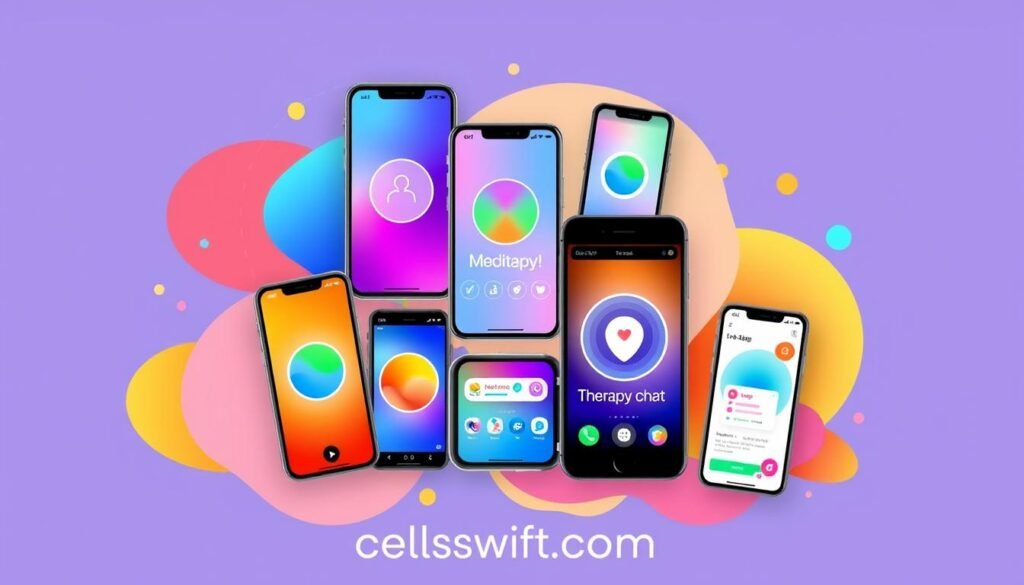
| App Name | Primary Function | Key Features |
|---|---|---|
| Happify | Mood Tracking | Games and activities for emotional well-being |
| Youper | Mood Tracking | AI-driven conversations and mood insights |
| Talkspace | Teletherapy | Text and video therapy sessions |
| Calm | Mindfulness | Guided meditations and sleep stories |
| iSleep Easy | Relaxation | Sleep sounds and relaxation techniques |
The Role of Data Collection in Mental Wellness Applications
Data collection boosts how mental health apps help users. By observing and learning from user data, these apps offer custom wellness advice. Yet, it brings up serious questions about privacy. Developers work hard to keep a balance. They aim to collect useful data while protecting private information.
Behavioral Tracking and Patterns
Behavioral tracking lets mental wellness apps find out what users do and feel. They can see mood changes, anxiety patterns, and overall mental health trends. This info guides personalized advice, even suggesting when to seek extra help. For insights on app strategies, see this analysis.
Privacy and Ethical Considerations
Though data collection has big benefits, it must be done ethically. When apps handle sensitive info carelessly, privacy risks pop up. Sadly, many apps don’t meet privacy needs, with 60% not making the cut in Mozilla’s reviews. This calls for user alertness.
Users should know how apps use and share their data. It’s key for keeping their information private. App makers need to follow top privacy standards. This keeps trust strong between users and apps.
| Aspect | Concerns | Solutions |
|---|---|---|
| Data Sharing | Apps sharing data with third parties without consent | Implement robust user consent protocols |
| Data Security | Poor app privacy practices | Regular audits and updates to encryption methods |
| User Trust | Loss of confidence in app providers | Transparent privacy policies and user control over data |
| Third-Party Access | Data brokers selling personal health data | Strict regulations on data sharing practices |
How Digital Therapy Apps Are Transforming Care
Digital therapy apps are changing mental health care for the better. They make important help exciting and easy to get. By using fun, interactive methods, these apps let people explore healing techniques like CBT. This makes users more likely to stick with it and see good results.
Interactive Intervention Strategies
Adding interactive features to digital therapy apps boosts user involvement. It turns healing into a team effort between the user and the app. This method keeps people coming back and helps them understand their mental health better. For more info, check out a study on how mental health services are evolving [here].
Peer Support and Community Connection
Digital therapy apps also build communities of support. They connect people who are going through similar things. Feeling part of a community can make you feel less alone and speed up recovery. Features like group chats and forums let users share help and advice in a welcoming place. This can make a big difference in someone’s mental well-being as they feel supported by others.
Mobile Mental Health Tools for Self-Care
Smartphone apps are now key for self-care and better mental health. They make it easy to keep healthy habits. Many apps help form good behaviors, improving our well-being.
Habit-Forming Techniques
Self-care apps change how I look after my mental health. Headspace and Calm, for example, guide you in meditation. A study showed Headspace reduces stress with just 10 minutes a day. Daily reminders and progress tracking in these apps help me stick to my habits.
Goal Setting and Achievement Tracking
It’s important to set goals for self-care. Apps like Happify and Sanvello let users see their improvements. They keep me motivated on my mental health path. The UCLA Mindful App and PTSD Coach also provide tailored support, helping me reach my goals.
I discover new apps for my routine by exploring hidden gems in the mental health space. Each app I try adds to my self-care, showing the value of routines for mental wellness.
Comparing Mental Health Apps: Which Is Right for You?
Choosing the right mental health app might seem hard. But knowing what makes a good app can really help. It’s important to check the app’s design, if it matches your needs, what users say, and how it protects your privacy.
Criteria for Effective App Evaluation
Here are key things to consider:
- User Experience: The app should be easy to use and navigate.
- Feature Relevance: The app’s features should meet your mental health needs.
- Privacy Standards: Make sure the app keeps your information safe and secure.
- User Reviews: Look at reviews to see what others think about the app.
App Reviews and Recommendations
Reviews are great for seeing how useful different apps are. Below are some popular mental health apps:
| App Name | Price | Key Features | User Rating |
|---|---|---|---|
| Talkspace | $65+ per week | 24/7 therapy support via messaging | 4.5/5 |
| Headspace | $12.99/month or $69.99/year | Guided meditations with a 14-day free trial | 4.7/5 |
| notOK | Free | Emergency support at your fingertips | 4.4/5 |
| iBreathe | Free with in-app purchases | Customizable breathing exercises | 4.6/5 |
| MindShift CBT | Free | Helps manage anxiety with strategies | 4.5/5 |
| I Am Sober | Free or $9.99/month for Plus | Sober day tracker and community support | 4.8/5 |
| Daylio Journal | $4.99/month (7-day free trial) | Mood tracking and goal setting | 4.6/5 |
Knowing how to evaluate apps and looking at popular ones helps in making a good choice. Picking the right app can make your mental health journey better.
The Future of Smartphone Mental Health Apps
The landscape of mental health support is changing fast, thanks to new tech. As someone who uses a smartphone, it excites me to see these changes. Mental health apps are getting more personalized and effective.
Emerging Technologies in Mental Health
Research into mental health apps is growing fast. Since 2019, over 100 new studies have been done. They look at how apps help with depression and anxiety. These studies show apps can make a small, but important, difference in treatment.
AI-Driven Interventions and Personalization
Artificial intelligence is key in mental health apps. AI lets developers make apps that meet each user’s needs. For example, apps with CBT features help more with depression symptoms. These apps offer better results and are more engaging for users.
Future apps may use virtual and augmented reality to improve therapy. With more data, the focus will be on keeping these innovations ethical and focused on the user. I’m excited for the future of mental health apps. They promise more support for our mental well-being.
| App Type | Effect on Depression (g) | Effect on Anxiety (g) | Features for Improvement |
|---|---|---|---|
| CBT Apps | 0.28 | 0.26 | Incorporate AI for personalization |
| Mood Monitoring Apps | 0.25 | 0.30 | Engage users with feedback loops |
| Chatbot Therapy | 0.35 | 0.40 | Utilize natural language processing |
| VR Exposure Therapy | 0.90 | 0.52 | Integration with real-life scenarios |
Integrating Wearables with Mobile Apps
Today’s fast world has seen a huge shift because of wearables linked with apps for mental health. I see the impact as huge. Smartwatches and fitness trackers help me watch my heart rate and sleep. This helps me understand my mental health better.
By using this tech, I can make better choices for my mental well-being. I become more aware of myself. It’s quite meaningful to me.
Mobile apps and wearables give quick access to mental health tools. For example, Headspace and Calm have meditation guides. Moodfit and Woebot help track your mood. These tools let me check my emotions and practice wellness easily.
They also get key data on my mental health. This means I can manage my mental health in a way that fits me best.
Key features of mental health apps for wearables include:
- Guided meditations
- Mood tracking functionalities
- Cognitive behavioral therapy (CBT) exercises
- Personalization options
- Health metric integration
- Community support features
These apps make it easier to get support and stay engaged with mental wellness. By tracking my mood and activity, I notice trends in my emotional health. Although there are some downsides, like differences in user experience and privacy worries, the benefits are still big.
Conclusion
Smartphone mental health apps have changed how we look after our mental health. Many apps have come up in the last ten years. This is due to a big need for mental health help, especially seen during the COVID-19 pandemic. Back then, college students felt more anxious and stressed.
Using these apps for support and cognitive behavioral therapy (CBT) can make treatment better. This shows how such platforms can positively change mental health.
However, not all apps are based on solid evidence. In fact, only 3% to 4% of them are. This means it’s important to pick the right app wisely. Apps with mood tracking and CBT can really help. They have been found to lessen symptoms of depression and anxiety a bit.
The making and improving of mental health apps will keep being essential. They ensure we have personalized and effective support anytime.
I’m excited to see how mental health care will evolve with tech advancements. New features and better privacy could make these apps even more helpful and easy to use. Making the most out of mental health apps will be key for our well-being. For more on the topic of mental health apps, check out this article.
FAQ
What are smartphone mental health apps?
How do mobile mental health tools enhance accessibility?
What features should I look for in mental health support apps?
Are digital therapy apps effective?
How do mood tracking apps assist users?
What are the privacy concerns related to mental health apps?
Can mobile mental health tools support self-care?
How do I choose the right mental health app for me?
What future advancements can we expect in smartphone mental health apps?
How are wearables integrated with mental health apps?
Source Links
- https://www.nimh.nih.gov/health/topics/technology-and-the-future-of-mental-health-treatment – Technology and the Future of Mental Health Treatment
- https://medium.com/@daveedlab/mental-wellness-in-the-digital-age-the-role-of-smartphones-and-ai-176360246e67 – Mental Wellness in the Digital Age: The Role of Smartphones and AI
- https://citizenadvocates.net/blog/the-impact-of-technology-on-mental-health-balancing-connection-and-screen-time/ – Behavior & Mental Health Services in NY | Citizen Advocates
- https://journalbipolardisorders.springeropen.com/articles/10.1186/s40345-019-0164-x – Smartphones in mental health: a critical review of background issues, current status and future concerns – International Journal of Bipolar Disorders
- https://mental.jmir.org/2023/1/e46949/ – Mobile Technologies for Supporting Mental Health in Youths: Scoping Review of Effectiveness, Limitations, and Inclusivity
- https://www.michiganmedicine.org/health-lab/mental-health-apps-may-help-those-waiting-care-study-finds – Mental health apps may help those waiting for care, study finds
- https://www.ncbi.nlm.nih.gov/pmc/articles/PMC5897664/ – Do mental health mobile apps work: evidence and recommendations for designing high-efficacy mental health mobile apps
- https://www.ncbi.nlm.nih.gov/pmc/articles/PMC9505389/ – Potential and Pitfalls of Mobile Mental Health Apps in Traditional Treatment: An Umbrella Review
- https://www.apaservices.org/practice/good-practice/mobile-behavioral-apps.pdf – GoodPracticeFall2015.pdf
- https://peakbehavioral.com/how-your-smartphone-can-help-and-hurt-your-mental-wellness/ – How Your Smartphone Can Help and Hurt Your Mental Wellness
- https://www.jmir.org/2013/11/e247/ – Smartphones for Smarter Delivery of Mental Health Programs: A Systematic Review
- https://adaa.org/find-help/support/mental-health-apps – Mental Health Apps | Anxiety and Depression Association of America, ADAA
- https://www.cnet.com/health/mental/best-mental-health-apps/ – Best Mental Health Apps of 2024
- https://www.nature.com/articles/s41746-019-0188-8 – Standalone smartphone apps for mental health—a systematic review and meta-analysis – npj Digital Medicine
- https://www.ncbi.nlm.nih.gov/pmc/articles/PMC8943537/ – Data Collection Mechanisms in Health and Wellness Apps: Review and Analysis
- https://mhealth.jmir.org/2019/4/e12578/ – The Role of Data Type and Recipient in Individuals’ Perspectives on Sharing Passively Collected Smartphone Data for Mental Health: Cross-Sectional Questionnaire Study
- https://www.latimes.com/business/technology/story/2023-05-02/mental-health-apps-privacy-risk-what-to-look-for – Mental health apps may put your privacy at risk. Here’s what to look for
- https://www.apa.org/practice/digital-therapeutics-mobile-health – Digital mental health technologies
- https://www.ama-assn.org/delivering-care/public-health/right-mobile-apps-can-help-boost-your-patients-mental-health – The right mobile apps can help boost your patients’ mental health
- https://www.ncbi.nlm.nih.gov/pmc/articles/PMC9256980/ – Digital Therapeutic Alliance With Fully Automated Mental Health Smartphone Apps: A Narrative Review
- https://psychiatry.ucsf.edu/copingresources/apps – Useful Wellness and Mental Health Apps
- https://www.verywellmind.com/best-mental-health-apps-4692902 – We Tried More Than 50 Mental Health Apps to Find These 8 Winners
- https://www.ncbi.nlm.nih.gov/pmc/articles/PMC9547331/ – Comparing Professional and Consumer Ratings of Mental Health Apps: Mixed Methods Study
- https://www.healthline.com/health/mental-health/mental-health-apps – The Best Mental Health Apps to Use in 2024
- https://www.ncbi.nlm.nih.gov/pmc/articles/PMC10785982/ – Current evidence on the efficacy of mental health smartphone apps for symptoms of depression and anxiety. A meta‐analysis of 176 randomized controlled trials
- https://mental.jmir.org/2016/1/e7/ – Mental Health Smartphone Apps: Review and Evidence-Based Recommendations for Future Developments
- https://smartphonesavant.com/mental-health-apps-for-wearables/ – Enhancing Well-Being: Exploring Mental Health Apps for Wearables – Smartphone Savant
- https://www.ncbi.nlm.nih.gov/pmc/articles/PMC9843326/ – A commentary on the potential of smartphones and other wearable devices to be used in the identification and monitoring of mental illness
- https://www.ncbi.nlm.nih.gov/pmc/articles/PMC11088638/ – Examining health apps and wearable use in improving physical and mental well-being across U.S., China, and Singapore
- https://www.frontiersin.org/journals/psychology/articles/10.3389/fpsyg.2021.647606/full – Frontiers | Effectiveness of Mobile App-Based Psychological Interventions for College Students: A Systematic Review of the Literature
- https://mhealth.jmir.org/2020/5/e17458/ – Mobile Apps for Mental Health Issues: Meta-Review of Meta-Analyses